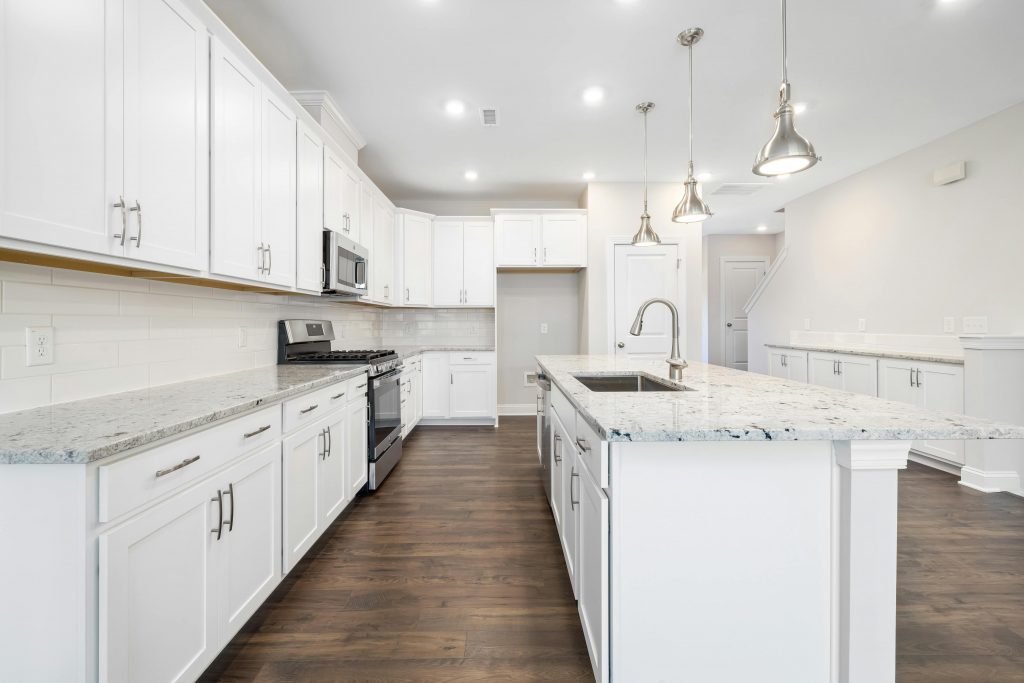

White kitchens are timeless, bright, and clean, but they can sometimes feel cold or sterile if not styled thoughtfully. Many homeowners love the crispness of white cabinets, countertops, and walls, yet want a space that feels inviting, cozy, and lived-in.
The good news is that warming up a white kitchen is easier than you think. By combining colors, textures, lighting, and decorative elements, you can maintain the airy, spacious feel of a white kitchen while creating a warm and welcoming atmosphere. This guide will show practical, actionable ways to achieve a warm white kitchen, with tips suitable for every budget and style.
Why White Kitchens Can Feel Cold
White kitchens can feel cold due to:
- Lack of color contrast: All-white walls, cabinets, and counters can appear flat.
- Minimalist design: Clean lines and uncluttered spaces are beautiful but may feel impersonal.
- Insufficient lighting: Cool-toned lighting can make whites feel stark.
- Lack of texture: Smooth surfaces without natural textures can appear sterile.
Understanding these challenges helps guide your choices in warming up the space without sacrificing the elegance of white.
1. Add Warm Colors
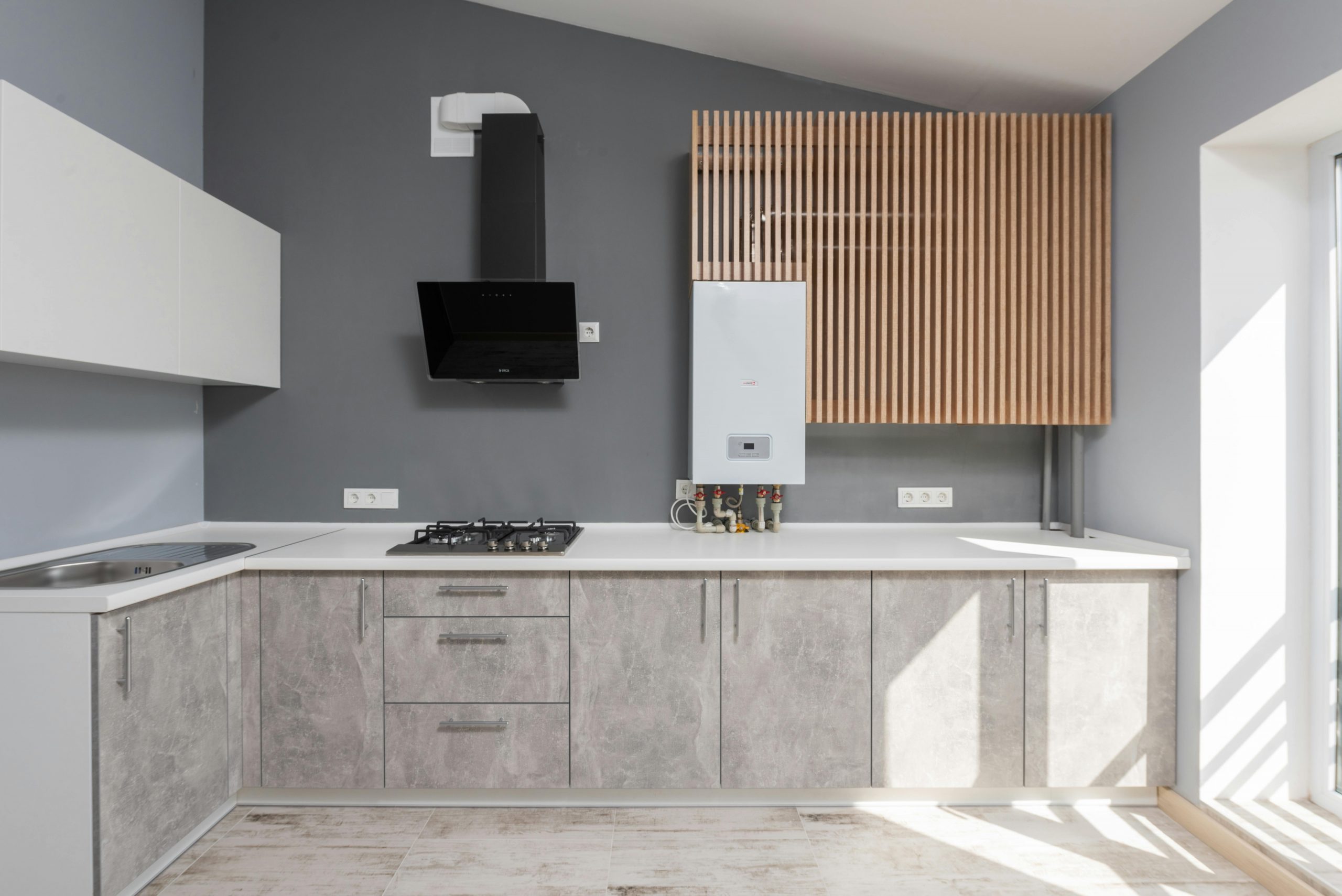
Introducing warm hues can balance the brightness of a white kitchen:
- Wall accents or paint: Consider a soft beige, creamy taupe, or light terracotta.
- Cabinet or island colors: A two-tone approach with a warm-colored island can create visual interest.
- Backsplashes: Warm tiles, like travertine, honey-toned glass, or soft brick, add depth.
- Accessories: Small items like rugs, dish towels, and countertop decor in mustard, burnt orange, or muted red can bring warmth.
Color doesn’t have to be overwhelming; subtle, thoughtful touches can make a big difference.
2. Incorporate Natural Materials
Natural materials add both warmth and texture:
- Wood: Hardwood floors, butcher block countertops, wooden stools, or floating shelves add an organic, cozy feel.
- Stone: Warm marble, granite, or travertine can soften a stark white kitchen.
- Rattan or wicker: Baskets, pendant lights, and chair accents introduce natural textures.
Even a small wooden cutting board or a set of woven placemats can break up the white and add inviting warmth.
3. Use Textiles Strategically
Textiles can make a kitchen feel lived-in and cozy:
- Rugs: Place a runner near the sink or stove in warm tones. Consider soft textures like wool or cotton.
- Curtains: Linen or cotton curtains in creamy or earthy colors soften bright sunlight.
- Seat cushions and throws: Add warmth to wooden or metal chairs with padded cushions or throws.
Mixing textiles with different textures creates visual depth and makes the space more inviting.
4. Warm Up with Lighting
Lighting is one of the easiest ways to change the feel of a white kitchen:
- Warm LED bulbs: Replace cool, white bulbs with warm, 2700K–3000K LEDs to soften whites.
- Layered lighting: Combine ceiling lights, under-cabinet lighting, and pendant lights for a cozy ambiance.
- Statement pendants: Warm-toned metal pendants like brass, copper, or bronze over an island add warmth and style.
- Natural light: Enhance natural sunlight with light-filtering curtains or mirrors that reflect warm light.
Well-planned lighting highlights textures and colors, instantly making a kitchen feel warmer.
5. Introduce Colorful or Textured Backsplashes
Backsplashes are a functional and aesthetic opportunity to warm up white kitchens:
- Warm-toned tiles: Terracotta, sandstone, or caramel glass tiles complement white cabinets.
- Patterned tiles: Moroccan or encaustic-style patterns add depth and personality.
- Metallic accents: Copper, gold, or bronze tiles can reflect light warmly.
- Natural stone: Marble with beige or honey veins softens the look of all-white kitchens.
Even a small backsplash section can dramatically affect the overall feel.
6. Accessorize Thoughtfully
Accessories are an easy, low-commitment way to introduce warmth:
- Cookware: Copper pots, wooden spoons, or ceramic bowls in warm tones.
- Plants: Greenery in clay pots adds life and a cozy vibe.
- Decor: A warm-colored fruit bowl, vintage jars, or artwork can personalize the space.
- Textured items: Woven trays, rattan placemats, or ceramic vases add depth.
Rotating accessories seasonally also keeps the kitchen feeling fresh and inviting.
7. Consider Flooring Options
Flooring has a significant impact on the overall warmth of a kitchen:
- Wood floors: Oak, walnut, or cherry add natural warmth.
- Warm-toned tiles: Terracotta or honey-colored ceramic tiles complement white cabinetry.
- Rugs and runners: Even if you have cold tiles, strategically placed rugs create a cozy footprint.
Flooring choices can anchor a white kitchen, making it feel inviting rather than stark.
8. Add Warm Metals
Warm metal finishes create subtle warmth and elegance:
- Cabinet hardware: Brass, bronze, or copper handles instead of chrome or stainless steel.
- Light fixtures: Warm metallic pendants or chandeliers over an island or dining area.
- Appliances accents: Choose models with bronze or brass details for a more inviting look.
Mixing warm metals with white surfaces adds contrast without overwhelming the clean look.
9. Incorporate Open Shelving
Open shelves provide a chance to introduce warmth through display:
- Wooden shelves: Lighter or medium wood tones soften white walls.
- Display dishes: Warm-colored plates, bowls, or mugs make the space feel personalized.
- Natural decor: Small plants, woven baskets, or cookbooks break up the white and add texture.
Shelving also gives the kitchen a lived-in, approachable vibe, while keeping it organized.
10. Layer Decorative Elements
Layering decor adds depth, which contributes to warmth:
- Art and prints: Framed prints with warm tones or rustic wooden frames.
- Countertop displays: Fresh fruit, cutting boards, or ceramic pitchers.
- Textural accents: Woven baskets, fabric placemats, or clay pots.
Layering small elements across the kitchen ensures warmth is evenly distributed rather than concentrated in one area.
11. Add Cozy Seating Areas
If your kitchen includes a breakfast nook or island seating:
- Cushioned stools: Soft fabric or leather cushions create comfort.
- Warm-toned seating: Wood or upholstered chairs in beige, camel, or rust.
- Textile throws: A folded throw on a chair adds a homey touch.
Creating inviting seating encourages the kitchen to feel like the heart of the home, not just a cooking area.
12. Balance Minimalism with Warmth
White kitchens often lean minimalist. To warm up the space without clutter:
- Mix materials: Wood, metal, stone, and textiles.
- Add subtle colors: Earth tones in accessories or small furniture pieces.
- Introduce natural elements: Plants, herbs, or wooden bowls.
- Maintain open space: Keep surfaces clean while adding touches of warmth strategically.
This balance keeps the kitchen feeling bright, modern, and welcoming.
13. Incorporate Warm Countertop Materials
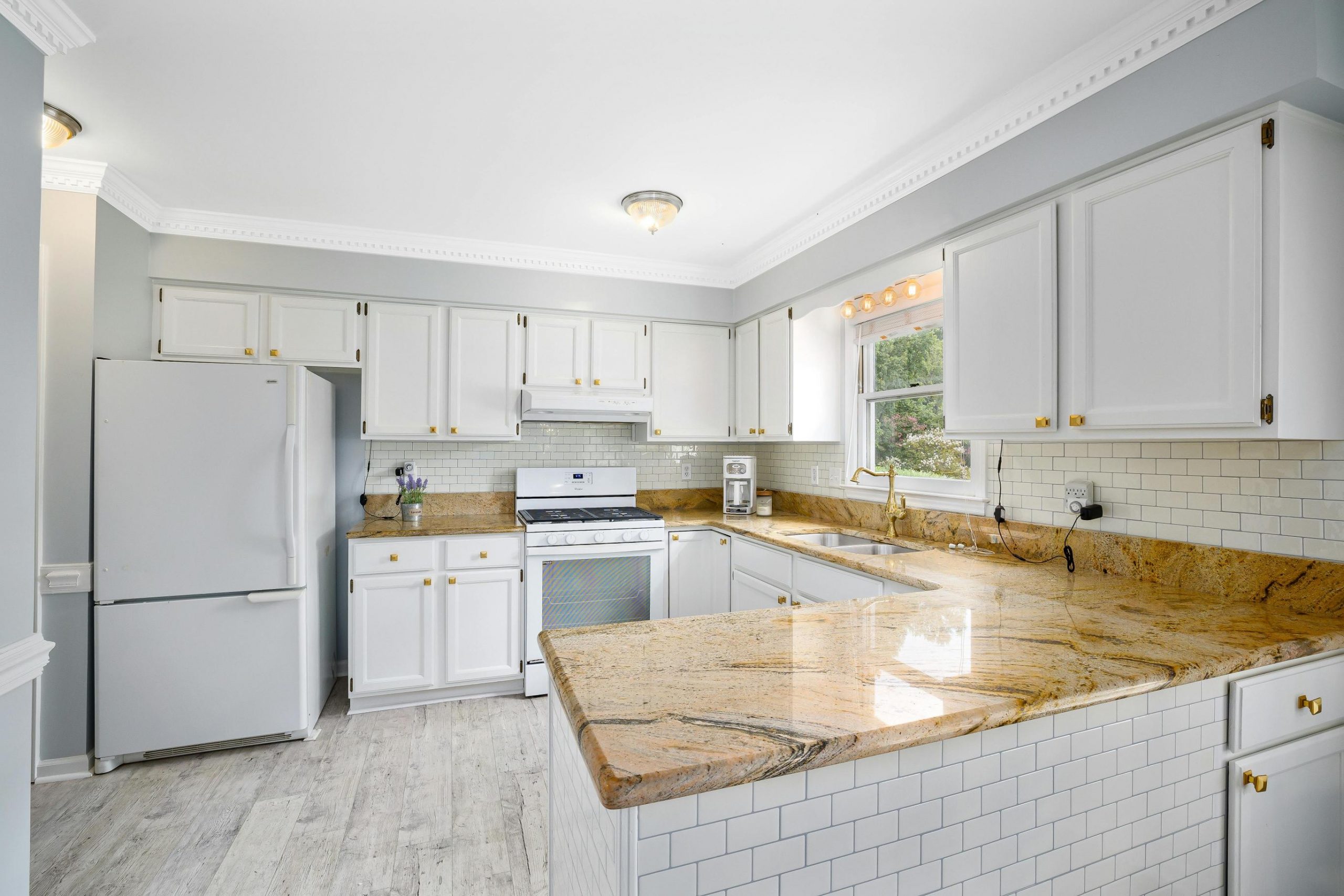
Countertops are a major visual element in any kitchen, and the material you choose can dramatically influence the warmth of the space. While white countertops look sleek, pairing them with warmer options creates balance:
- Butcher block wood: Adds natural warmth and texture, and pairs beautifully with white cabinets.
- Warm-toned quartz or granite: Cream, beige, or honey-veined stones add subtle color without overpowering the white.
- Soapstone: Slightly darker than marble, it introduces depth and a soft warmth.
- Concrete with warm pigments: Can add a modern but cozy feel if finished in soft brown or caramel tones.
Even small sections of warm countertops, like a butcher block island top, can make a white kitchen feel inviting.
14. Add Statement Lighting Fixtures
Lighting isn’t just functional—it’s a key decorative element. Bold, warm-toned fixtures can elevate a white kitchen while adding warmth:
- Pendant lights over the island: Choose brass, copper, or matte gold for a luxurious, cozy feel.
- Chandeliers in dining areas: Wooden or metal chandeliers can create a warm focal point.
- Under-cabinet lighting: Soft LED strips highlight backsplash textures and keep the kitchen glowing.
- Dimmable lights: Allow you to adjust brightness for a softer, cozier atmosphere during evenings.
A well-chosen light fixture can add personality, warmth, and visual interest without sacrificing modern elegance.
15. Introduce Greenery and Natural Decor
Plants are a simple yet effective way to warm up any space. They introduce color, texture, and a sense of life:
- Potted herbs: Basil, rosemary, and mint are practical for cooking and visually appealing.
- Small indoor plants: Place on windowsills or open shelves for pops of green.
- Hanging planters or terrariums: Add dimension and a natural touch without cluttering counters.
- Natural decor items: Wooden bowls, clay pots, and woven baskets tie in with warmth and texture.
Plants also improve air quality and make your kitchen feel more connected to nature.
16. Play with Patterns and Artwork
Patterns and art bring personality to a white kitchen and prevent it from feeling sterile:
- Artwork: Hang prints, framed photographs, or canvas art in warm tones.
- Patterned tiles or backsplashes: Even a small section with Moroccan or encaustic patterns adds visual warmth.
- Rugs and runners: Geometric or floral patterns in warm colors break up the monotony of white floors.
- Fabric accents: Patterned tea towels or chair cushions can echo the colors in artwork or rugs.
Even subtle patterns make the space feel inviting, playful, and stylish without overwhelming the minimalist aesthetic.
17. Consider Seasonal Updates
White kitchens are perfect for seasonal styling, which adds warmth and freshness throughout the year:
- Fall: Add pumpkin-colored accessories, warm wood accents, and cozy textiles.
- Winter: Layer metallics like gold or copper, plus soft, plush rugs.
- Spring: Fresh flowers, pastel-colored decor, and herb plants add life and color.
- Summer: Bright fruit bowls, natural wicker baskets, and light linen textiles create warmth without heaviness.
Seasonal updates are a cost-effective way to keep your white kitchen feeling fresh, inviting, and personalized year-round.
Conclusion
A white kitchen doesn’t have to feel cold or sterile. By combining warm colors, natural materials, cozy textiles, layered lighting, greenery, and seasonal decor, you can transform it into a space that’s both bright and welcoming.
Key strategies include:
- Using wood, stone, and metals for warmth and texture.
- Layering lighting, textiles, and accessories to create depth.
- Introducing plants, art, and seasonal touches for personality and life.
- Balancing minimalism with strategic warm elements to maintain elegance.
With these additional tips, your white kitchen can remain modern and airy while feeling inviting, cozy, and full of personality—a space your family and guests will love to gather in.